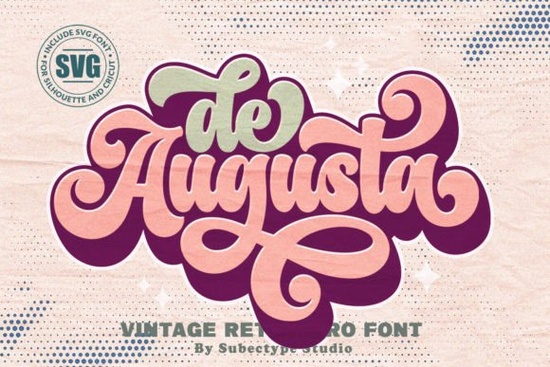
If you're looking for a vintage retro font that feels authentic not just nostalgic but genuinely rooted in 70s and 80s lettering De Augusta Font is worth your attention. It’s not overly distressed or gimmicky; instead, it balances bold, confident shapes with subtle retro quirks: slightly uneven baselines, warm curves, and a relaxed rhythm that reads as handmade rather than digital. Whether you’re designing a t-shirt for a small-batch apparel shop, mocking up packaging for a craft beverage brand, or laying out a book cover for an indie publisher, this font brings quiet confidence without shouting.
What makes De Augusta work so well for real projects?
First, it’s PUA encoded meaning all alternate glyphs, swashes, and stylistic sets are accessible right in your design app (like Illustrator or Affinity Designer) without needing special software or workarounds. You won’t need to hunt through character maps or install extra plugins. Just type, then open the Glyphs panel and pick the version that fits your layout best.
Second, its versatility lies in its restraint. Unlike some retro fonts that lean heavily into disco glitter or synthwave neon, De Augusta keeps things grounded. That makes it easier to pair with clean sans-serifs, hand-drawn illustrations, or even minimalist photography. It works just as well on a linen tote bag tag as it does on a matte-finish candle label or a vinyl record sleeve.
Where do designers actually use it?
- Branding for small businesses especially those with heritage vibes, like bakeries, apothecaries, or local breweries wanting warmth and authenticity.
- T-shirts and merch its bold weight holds up well on screen printing and DTG, and the letterforms stay legible even at smaller sizes.
- Packaging & signage the slight irregularity adds charm without sacrificing readability from a distance.
- Book covers and editorial layouts it pairs nicely with serif body text for contrast, or stands alone for bold chapter headers.
You’ll also find it fitting naturally alongside other display fonts with personality. For example, if you like the chunky presence of Summer Chunky Font, you might reach for De Augusta when you want something with more texture and era-specific nuance. Or if you’ve used College Black Font for collegiate or athletic themes, De Augusta offers a smoother, more laid-back alternative for retro-but-not-sports-focused projects.
It’s also a thoughtful companion to Selina Daniel Duo Font when you need contrast between headline and subhead say, pairing De Augusta’s bold caps with Selina’s elegant script for a wedding invitation suite or boutique stationery line.
And while it shares some warmth with Lemon Font, De Augusta leans less playful and more timeless better suited for branding that aims to feel established, not just cheerful.
For designers who frequently switch between print and digital output, one practical note: De Augusta includes both OTF and TTF files, so you can use it across platforms without compatibility hiccups. Kerning is well-adjusted out of the box, and the uppercase letters have enough distinction to avoid visual monotony especially helpful when setting short, impactful phrases like “Est. 1978” or “Small Batch.”
How does it compare to other retro-inspired fonts?
Retro typography spans a wide range from mid-century modern clean lines to gritty phototype imperfections. De Augusta sits comfortably in the middle: bolder than Strong Bubble Font, but with more structure and less cartoonish flair. It doesn’t try to mimic typewriter keys or dry-transfer lettering it draws from sign painting, album art, and early graphic design manuals where letterforms were drawn by hand but meant to be reproduced consistently.
If you’re curious about how it stacks up against similar offerings, you can see De Augusta Font live on Creative Fabrica, where you’ll find usage examples, license details, and preview files you can test before downloading.
One thing users consistently mention: it scales well. Whether you’re blowing it up to 200pt for a wall poster or scaling down to 24pt for a product tag, the proportions hold. That’s rare and useful when you’re juggling multiple formats for the same campaign.
Before you download: A quick checklist
- ✅ Check your license needs De Augusta includes both personal and commercial use rights, but verify if you plan to use it in templates for resale (e.g., Canva templates).
- ✅ Try it with your brand’s existing color palette its warm undertones work especially well with ochre, deep teal, charcoal, and cream.
- ✅ Test spacing in your layout software while kerning is solid, always preview at final size, especially for tight lines like “VINTAGE COFFEE” or “HANDMADE IN OREGON.”
- ✅ Pair it thoughtfully avoid stacking too many decorative fonts. Let De Augusta lead, then support it with a neutral sans-serif (like Inter or Montserrat) or a gentle serif (like Literata or Lora).
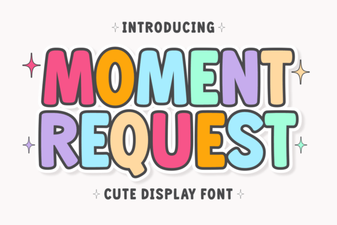 Craft Designs with Moment Request Font
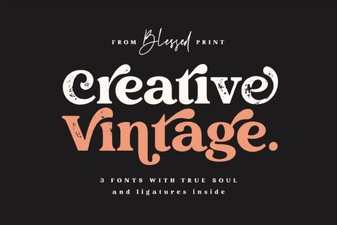 Craft Your Project with Vintage Fonts & Style
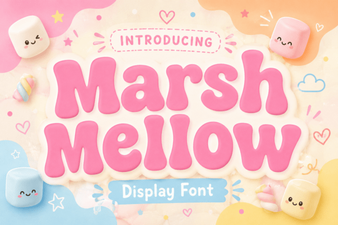 Use the Marshmellow Font for Fun and Creative Projects
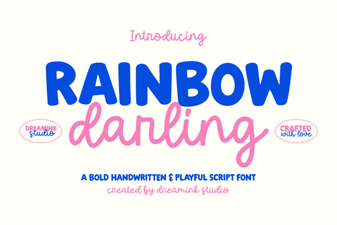 Rainbow Darling Duo Font: Designs & Pairing Tips
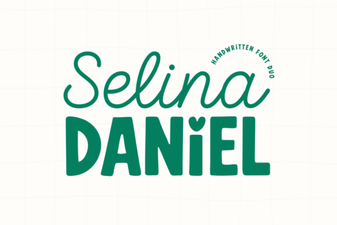 Selina Daniel Duo Font: a Creative Web Design Asset
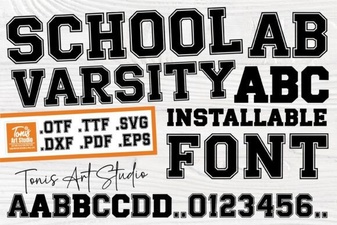 Varsity Fonts for School Design Projects